The word feminism carries histories that don’t fully reflect my own. Here’s why the framework of womanism — rooted in community, survival, and repair — resonates more deeply.
There is a moment in certain conversations where I realise we are not actually disagreeing.
We are speaking different languages.
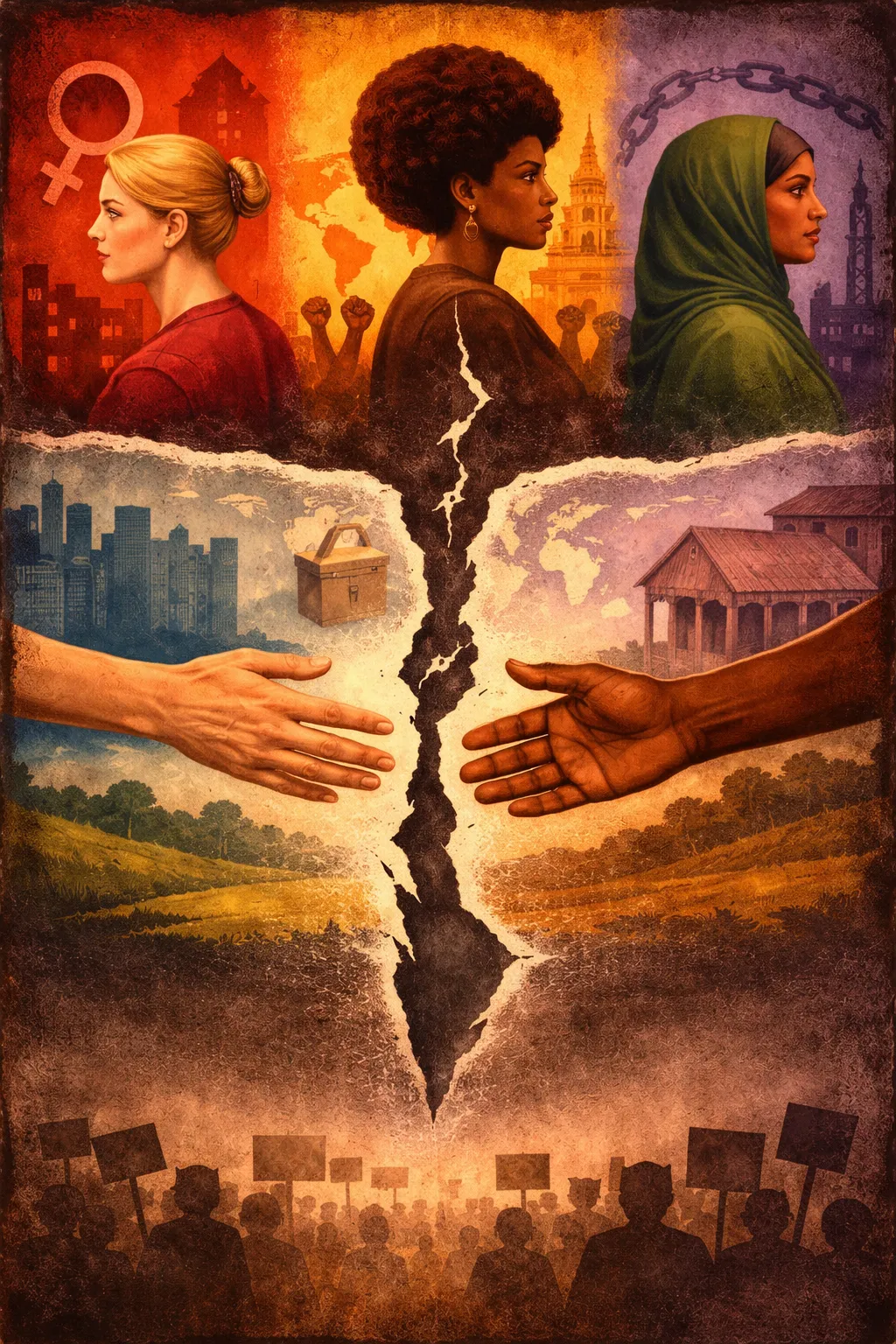
The word sitting between us might be the same. Feminism. But the meanings attached to it are so different that the conversation cannot move forward.
To one person, feminism means man-hating women.
To another, it means the pursuit of gender equality.
To someone else, including many women of colour, feminism is a project historically shaped by white women whose priorities often did not account for race, class, colonialism, and the realities of women outside the West.
All three people believe they are talking about the same thing.
They are not.
And once language breaks like this, debate becomes almost impossible.
My Answer When People Ask
People sometimes ask if I’m a feminist.
I don’t fuss about the term.
But when the question comes directly, my answer is usually simple.
I’m a womanist.
Of course I advocate for women’s rights.
But the word feminism carries histories that do not fully reflect my own. The early struggles that shaped it, particularly white women’s fight for suffrage within Western democracies, were not built from the same conditions that shaped my community.
That difference still echoes.
In the United States, 53% of white women voted for Donald Trump in 2016, and 55% in 2020. A majority, across two elections, aligned with a candidate whose policies and rhetoric were widely understood to undermine women’s rights, particularly for women of colour, migrants, and working-class communities.
That reveals something about how priorities are shaped, and how different experiences inform political choices.
Naming that matters.
Because naming the struggle correctly helps us understand whose experiences were centred, whose were not, and why.
The Four Waves of Feminism
To understand these tensions, it helps to look at how feminism has evolved.
First-wave feminism focused on legal rights, especially the right to vote. In both Britain and the United States, this movement was largely led by white middle-class women. Black women participated, but their concerns, including racial violence and economic survival, were often not prioritised.
Second-wave feminism expanded the agenda to include workplace equality, reproductive rights, and legal protections. It gave us many of the frameworks still used today. At the same time, many women of colour highlighted how the movement often centred workplace access, while giving less attention to survival issues shaped by race and class.
Third-wave feminism began to hold these complexities more openly. It questioned fixed ideas of womanhood and made space for more diverse identities.
A turning point came with Kimberlé Crenshaw’s articulation of intersectionality, which named how systems of oppression overlap. Race, gender, class.
Black women had been describing this reality for generations.
Naming the thing gave it weight.
Fourth-wave feminism, shaped by digital activism and movements like #MeToo, has brought unprecedented visibility. Conversations about harassment, representation, and structural inequality now travel globally in seconds.
And the disparities remain visible alongside that.
In the UK, Black women are still significantly more likely to die during pregnancy or childbirth than white women. Disabled women experience higher rates of domestic abuse. LGBTQ+ women face disproportionate levels of violence and economic insecurity.
The visibility has increased. So has the clarity around who remains most vulnerable.
The Problem Inside Feminism
The difficulty is also internal.
Feminism spends a great deal of time negotiating itself. Debating what counts. Who belongs. What the “right” version of the movement looks like.
These debates have produced important insights.
They have also created a movement that is constantly defining and refining itself.
Meanwhile, many of the people most affected by inequality are simply trying to navigate systems that do not recognise them at all.
This is where womanism enters.
Why Womanism Resonates With Me
The term womanism was popularised by Alice Walker, who described a womanist as:
“A Black feminist or feminist of color… committed to survival and wholeness of entire people, male and female.”
That last part matters more than people often admit.
Entire people.
Womanism emerged because many Black women needed language that accounted for the full conditions shaping their lives.
Race.
Colonial histories.
Economic survival.
Family structures.
Community responsibility.
Spiritual grounding.
These are the contexts within which survival happens.
Clenora Hudson-Weems later developed Africana womanism, grounding it in principles that reflect this reality:
Self-definition. The right to name yourself, rather than be named by others.
Family-centredness. Recognising the family as a site of both struggle and survival.
Community strength. Understanding that individual progress is tied to collective wellbeing.
Genuine sisterhood. Solidarity rooted in shared experience and responsibility.
Respect. For self, for others, for the community.
Spiritual grounding. A connection to something beyond the material.
Compatibility with men. Collaboration in the pursuit of collective liberation.
Making Space for the Journey
This is where womanism feels most honest to me.
It assumes people are at different points.
Hudson-Weems’ work reflects this clearly. Africana womanism recognises that consciousness is shaped by lived experience, and that people often internalise the systems they are trying to navigate.
Someone may not yet have language for patriarchy.
Someone else may still be working through beliefs shaped by it.
The work is about engagement. Growth. The possibility of change.
In a world where many movements are constantly defining boundaries, that openness matters.
Because transformation rarely happens in perfect conditions.
Returning to the Word
I respect the word feminism.
It carries histories of resistance, courage, and progress.
But when people ask me what I am, the word that still feels most accurate is:
Womanist.
Because it captures something essential.
The struggle is about more than women achieving equality with men.
It is about entire communities learning how to live with dignity together.
And sometimes the first step toward that dignity is recognising that the word sitting between us might not mean the same thing at all
Subscribe to my Substack to Learn more