
Music, memory, and all the lives a song can carry
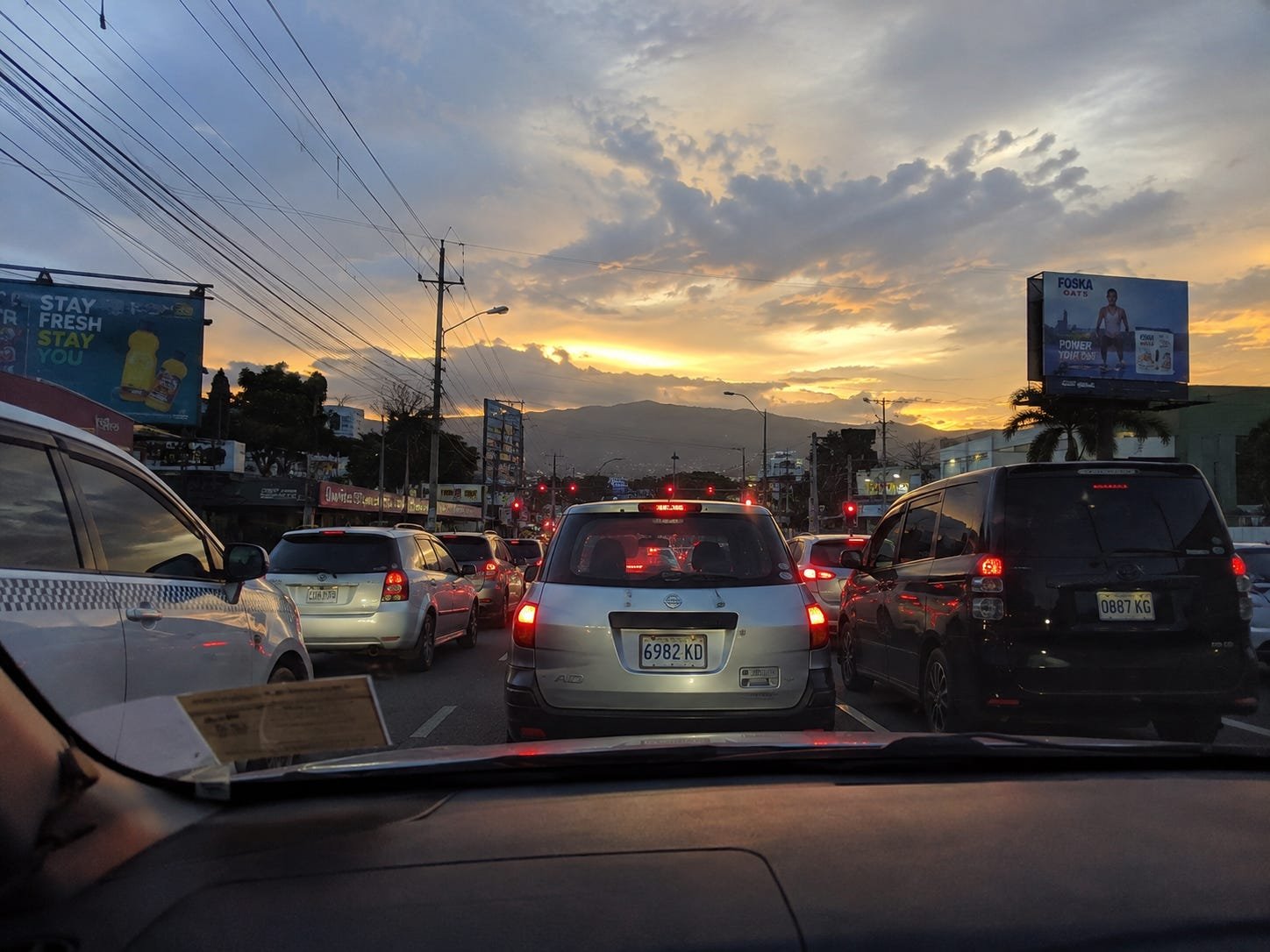
If you have seen me driving around Kingston recently, there is a fairly good chance you have also seen me singing at the top of my lungs, windows firmly up because Kingston is far too hot to perform for the public with the AC escaping, head bobbing, one hand on the steering wheel and the other occasionally offering the daintiest gun finger imaginable when the song requires it, my face carrying the commitment of someone who has forgotten that everyone else can see through glass.
Every now and then I am crying too. If you happen to pull up beside me at the light and notice tears running down my face, there is likely no cause for alarm. I am probably just listening to Lila Iké. Second Chance, if we are being specific.
I have been listening to music recently, feeling its impact in real time with very little control over where it lands. A bassline can settle somewhere behind my sternum, a chord change can make my throat tighten, and a few notes can bring back a person, a room, an argument, an entire period of my life while I am sitting in traffic thinking about something completely unrelated. There is a physicality to it that I have become increasingly aware of, as though sound is moving through the body, digging around in whatever I have stored there and deciding, without consultation, that today is the day we are going to deal with it.
Sometimes I use this intentionally because music can also organise my body in ways I find useful. Before I play tennis, I usually listen to R&B because it slows something down in me and makes me think about rhythm and pace, about allowing the point to develop instead of trying to murder every ball that comes across the net, which remains one of several areas of my life where patience would probably serve me well. On other days, I know I am frustrated, or sad, or carrying something that needs somewhere to go, and I put on a playlist made for unrequited love precisely because I know what it will do. Sometimes you need to cry and there is no reason to sit around waiting for the tears to show up in their own time.
My relationship with memory probably has something to do with all of this. I have spent years thinking about what people remember and what gets forgotten, professionally as a political scientist interested in the stories societies tell about themselves, and personally as the daughter of two people whose stories became mine to hold after they died. I have also spent years trying to understand why so much of my childhood feels inaccessible to me until something gives it shape, and very often that something is music.
There are enormous stretches of childhood I cannot summon on command until I hear a Christmas carol and can almost see us sitting around the dining table with eggnog in our family home, or Once Upon a Dream fills me with the same anticipation I felt as a little girl imagining my own Prince Charming, before I knew how problematic princes can be. I remember Sunday mornings after church when Anita Baker seeped through the wooden speakers Daddy had positioned around the house, her voice settling into our home so that I came to associate it with comfort, with being home, with him. Years later, when Daddy slipped into a coma, I played Anita Baker for him because I knew what that music had meant in our house, and I wanted to give some of that comfort back to him.
Perhaps this is why art has occupied so much of my life, and why I spend a ridiculous amount of my professional time thinking about how to make people feel the things I also need them to understand. I have curated exhibitions and installations about women dying during pregnancy and childbirth, sexual and reproductive health, violence and inequality, all the horrors that can become bloodless once we turn them into policy language and put percentages beside them. I have watched people move quickly past statistics and stop in front of a photograph, suddenly understanding through colour, sound and somebody’s face that a preventable death is a woman who should have gone home.
Music seems to preserve these versions of me with extraordinary efficiency, which is why some songs now feel almost archaeological; I hear them and find whole periods of my life underneath. There is the woman dancing to Silent Night with candles everywhere, the room soft enough to make the future feel settled, and another version of me on a bus traveling from Negril to Montego Bay with a group of bikini-clad best friends, Sizzla and Foxy Brown playing on repeat while we laughed with the particular arrogance of young friendship, when you assume that the people who know every detail of your life will always know every detail of your life.
Some of those women now live so far from one another, geographically and emotionally, that we might struggle to recognise the intimacy we once shared, yet a song can restore that bus in seconds. I can see bare legs pressed against seats, beach bags everywhere, somebody shouting over the music, the road curling along the coast and all of us still belonging to one another. Music keeps copies: of people, of places, of who we were with them, and sometimes of who we thought we were going to become.
Monica’s Before You Walk Out of My Life, for example, has recently become the soundtrack to a completely fictional version of myself walking onto a tennis court carrying a boombox in one spectacular attempt to retrieve my heart, because apparently heartbreak has transported me into a 1990s romantic comedy and convinced me that public spectacle remains a legitimate courtship strategy. I have directed this scene several times, the lighting is excellent, and I have yet to settle on the outfit, which feels like the only genuine obstacle to production. Some deeply unserious part of me hears Monica making her plea and thinks that perhaps one grand gesture remains.
There is something about Second Chance that lands directly in the part of heartbreak concerned with possibility: the part that can understand perfectly well what has happened and still wonder about another version of the story. A second chance is such a small phrase for an enormous fantasy. It contains the person you miss, everything you would do differently, everything you hope they might do differently, the conversations you would finally get right and the future you had already begun constructing. Put that inside a song while I am driving through Kingston and apparently my body sees no reason to distinguish between something I lived and something I wanted badly enough to imagine in detail.
Music gives extraordinary texture to lives that never happened. There are homes I have constructed in my head so completely that I could tell you where the sofa sits, Sunday mornings I can almost remember, conversations I rehearsed enough times to leave behind the emotional residue of something actually said, and futures with people that gathered birthdays, Christmases, arguments, ageing parents, children, dogs and retirement plans without ever making it beyond imagination.
Intellectually, I can identify which memories belong to my life and which belong to the life I wanted; my chest is less discerning
Music gives me somewhere to put all these versions of my life, and somewhere to visit them when I choose. For a few minutes I can have my parents in the house again, Anita Baker coming through Daddy’s wooden speakers and Christmas music playing over breakfast; I can have that bus to Montego Bay and friendships before distance changed them; I can stand in a candlelit room with someone I love, or spend the length of a song inside a future I once wanted badly enough that losing it still registers somewhere in my body.
And then I am back in the car.
The light changes, Kingston traffic starts moving, the tennis court is waiting, somebody has sent a WhatsApp message I have forgotten to answer, and whatever the song has pulled to the surface comes with me, perhaps rearranged slightly by having been allowed into the open. Music cannot return the people, repair the relationship or make an imagined life materialise, but it can hold what happened, what I hoped would happen and who I was while hoping for it.
That is usually enough.
So if you see me somewhere on Hope Road with the windows up, singing loudly enough to concern the person in the car beside me, head moving and tears streaming down my face, you can assume I am exactly where I need to be.


