
I’ve been thinking about love languages lately—not as a quiz or a taxonomy, but as something quieter and older. Where they come from. How they arrive in us before we have language for them.
Quality time is mine. Unsurprisingly physical touch is the least important. I think I was born into it.
Growing up, my siblings and I were a tight little cosmos that spun around the axis of my parents. Until Mummy and Daddy split in the early 2000s, we kept our rituals: dinner together every night. On weekends, we lingered over breakfast, savouring the slowness of mornings. After they separated, the family kept Christmas close and personal—just the five of us, the world held at bay. Just us. Being together.
Our love lived in the things we did alongside one another—practising the piano, playing cricket in the front yard, watching WWF, and, my retrospective favourite, reading. Curled up on the couch under the flickering light of a kerosene lamp during blackouts. It wasn’t words that held us. It was nearness.
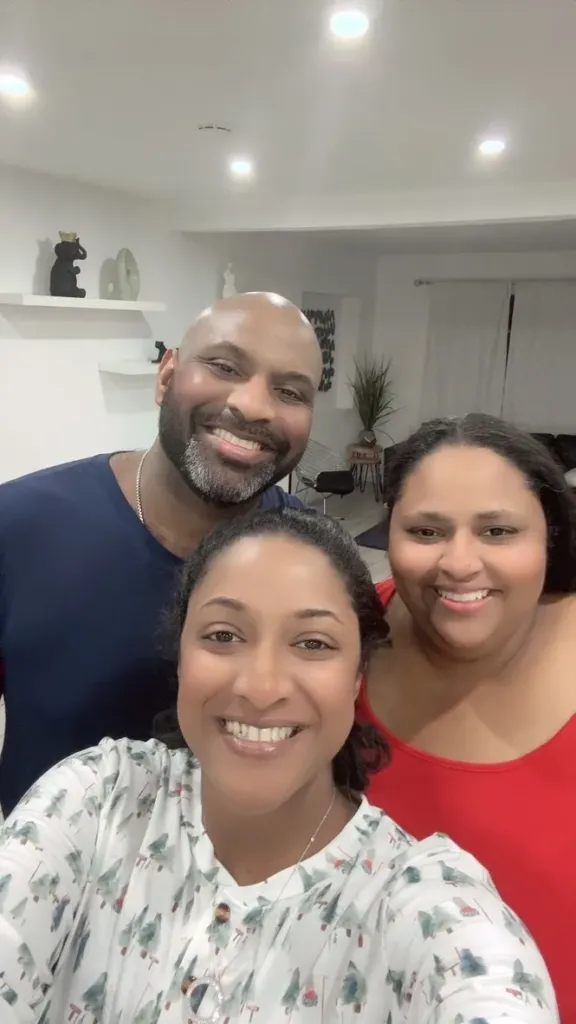
Even now—more than twenty years later—I’m here visiting my brother and his family in the Cayman Islands, a second home that has significant memories. It’s just after 8pm. I’m at my laptop, taking a break from work to write this. He’s sitting across from me, also working. No TV on. No agenda. Just the quiet buzz of the air conditioning that keeps me wrapped up in a blanket and the quiet competence of shared focus. I feel closer in this moment than I do after deep conversations or big plans or fancy dinners. Silence. Proximity. Calm.
Many people feel uneasy in silence. For me, it creates space for a non‑emotive, emotional kind of kinetic bonding—the sort that doesn’t ask to be witnessed. Nothing is being performed. Nothing needs to be translated. We are simply here, together, and that is enough information.
So often we’re taught that love must announce itself. That it needs to be articulated, defended, amplified. That if someone doesn’t show up the way we imagine—fighting
for us, shouting from rooftops—it isn’t love. But love has many textures. Some of them are soft and unassuming. Some of them are private. Some of them don’t ask for consensus.
Quality time, for me, is not about attention as spectacle. It’s about presence as practice. It’s the way time stretches when no one is rushing you. The way a room settles when two people can sit inside their own thoughts without leaving one another. The way care can be felt without being named.
I don’t need love to convince anyone else. I don’t need it to be impressive. I just need it to be true.
If you know, you know— you know?
