

PUBLICATIONS

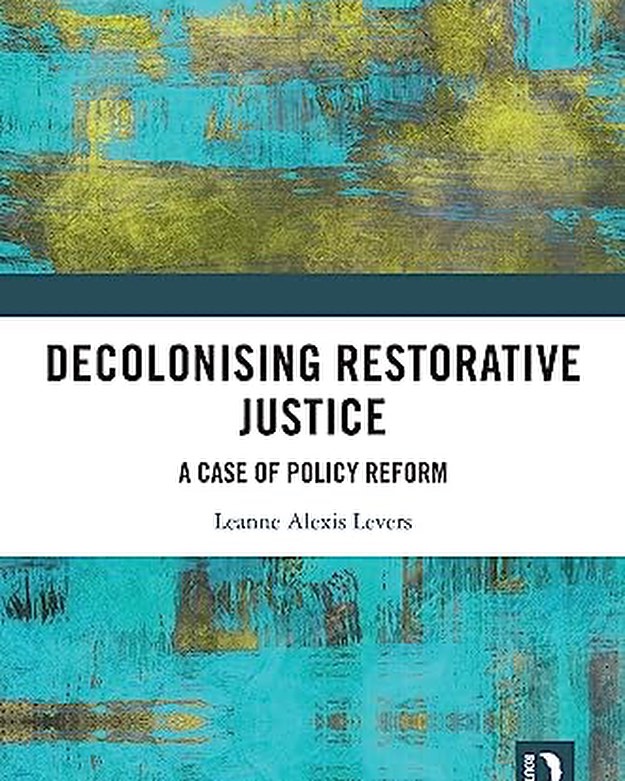
Decolonising Restorative Justice: A Case of Policy Reform

My first book, published by Routledge, examines how restorative justice—intended as a relational, community-led practice—has been reshaped through colonial and donor-driven policy transfers. Using Jamaica as a focal point, it critiques one-size-fits-all models and calls for justice processes rooted in local culture, history, and lived realities. Read more →


Reviews

Giuseppe Maglione & Lilly Elkington
Justice does not happen in a vacuum. The quest for justice unfolds within intricate political, cultural and economic contexts. These settings often embody struggles between the disenfranchised and those who wield the dual power of material and cultural oppression. Colonialism, and its lingering effects, is one of those contextual dynamics that deeply influence searching for, obtaining or being denied the experience of justice. Conversely, neglecting colonialism’s effects not only pre-empts the understanding of what hinders or facilitates the search for justice but also, ultimately, contributes to perpetuating (colonial) injustice. Restorative justice is not immune to such dynamics and their effects. This is why studies like Leanne Alexis Levers’Decolonising restorative justice: a case of policy reform are precious additions to the incipient critical sensitivity to the recognition of restorative justice’s colonial legacies. By using Jamaica as a case study, this book not only critiques the shape that restorative justice has taken in that context, but also engages with the actual struggle for decoloni- sation to generate an alternative space to colonialism’s epistemic and material violence.

Dr Adele Jones
Dr Adele JonesSpecialist on Human Rights Prevention of Violence against Women and Girls.
Leannes writing is very strong and this book will be a unique and much-needed contribution to the international literature on restorative justice. The critique and insights promised by the synopsis and indeed, offered up by the sample chapter, will enable a critical approach to RJ that will be far-reaching and hopefully, will profoundly disrupt the 'taken-for-granted' assumptions on which it is often based.

Baba (Forthcoming)

Baba: What We Carry, Repeat, and Repair — A Jamaican Girlhood tells the story of a Black girl growing up in 1980s Jamaica, navigating family fractures, racial politics, sexual violence, and the quiet, enduring devastations of caregiving, while asking how Black women might begin to repair ourselves whilst systems of colonialism constantly try to undo us.
Woven through these chapters is womanist theory and restorative justice, not as abstraction but as lived experience. The book frames healing as micro-decolonisation: the daily, imperfect act of reclaiming what colonial and patriarchal systems have stripped away. Memory itself becomes an act of repair; telling the truth— it unsettles families or fractures communities—becomes a way of insisting on wholeness.
At its heart, Baba asks urgent, universal questions: How do we carry what our families give us? What do we repeat when it harms us? And how do we begin to repair inside the same structures that taught us to endure instead of heal?.

Dr Leanne Levers is represented by KAB Literary Agency.

© Leanne Levers. 2025. All Rights Reserved.