There’s an African proverb that says: “Until the lion tells the story, the hunter will always be the hero.”
But what happens when the lion begins to speak—and someone tries to cut out its tongue?
Recently, Donald Trump issued an executive order titled “Restoring Truth and Sanity to American History.”
This isn’t about truth. It’s about erasure. It’s about sanitising the past to protect the comfort of those used to holding the pen. It’s about memory. It’s about who gets to speak—and who gets edited out.
To know and to feel—they are two different things.
Think about the first time you felt history. Not read it. Not debated it. But felt it—in your body.
I was in Rwanda, walking through the Kigali Genocide Memorial. I knew the number—over 800,000 people killed in 100 days. It’s the kind of statistic that sits heavy on paper, often reduced to a paperweight used to anchor a conversation that would otherwise float away—light, detached, untouched. Because numbers don’t carry grief. They don’t carry blood. They don’t carry names. Stories do.
Inside the museum, I saw photographs of children who never made it out. I read last words written by people who were never buried properly. I heard recordings of survivors recalling the moment everything fell apart—and no one came to help.
There was another woman there. She was walking through the same space. Her body stopped to grieve. At first, she was quiet. Then she began to sob. Then wail. Then scream. Her voice carried through the building. It wasn’t polite. It wasn’t sanitised. It was what happens when people are able to feel history instead of just learn it.
And feeling is what moves people. It’s what makes you unable to look away. It makes your body say, “Enough.”
This is why Storytelling Matters
Storytelling is not just a means of communication—it is a tool for disruption. It is how we tell the stories that institutions would rather forget. It is how we resist.
As a communicator, I have the privilege of telling stories—not just in words, but in image, rhythm, sound, and space. I work with local storytellers across the globe to raise awareness and ultimately drive systemic change—whether around the impact of climate change on 650,000 pregnant women in flood-affected Pakistan or the worsening malnutrition crisis facing more than a billion adolescent girls and women worldwide.
Because the numbers aren’t enough. People must see. Must feel. Must care before they begin to act.
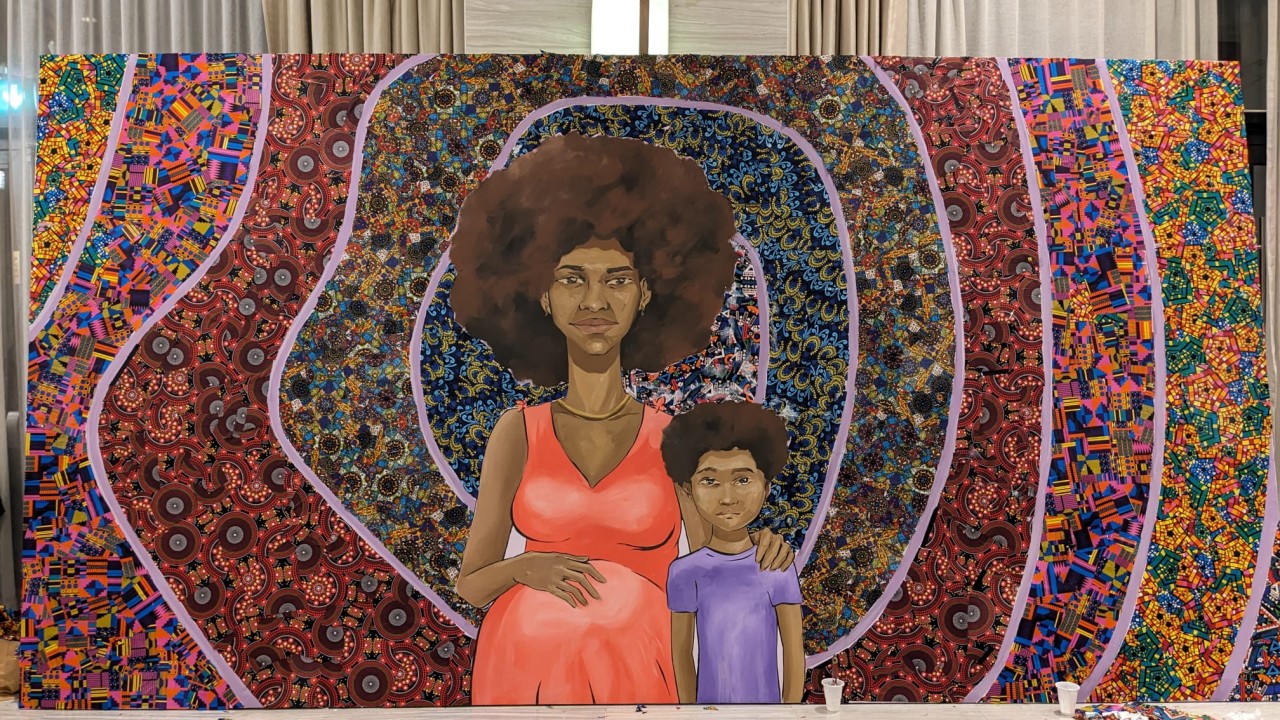
I’ve seen how murals, short films, dance pieces, and spoken word can shift public perception, shape policy, and mobilise communities. Not because they shout the loudest—but because they speak in a frequency people can actually hear.
We Will Tell it Anyway
Trump’s executive order isn’t just about controlling museum exhibitions. It’s about controlling the narrative. In controlling the narrative, he controls who gets seen, who gets heard, who gets remembered. He isn’t just trying to edit the story—he’s trying to edit how you think, how you feel, how you move through this world.
Trump’s order might try to mute the sound of our stories—but we will tell them anyway. With paint and poetry. With documentary and dance. With data that sings and stories that say, this is happening. These lives matter. And you cannot pretend otherwise.
Because the truth is not a safe space.
It is a place of reckoning