“I’m for truth, no matter who tells it. I’m for justice, no matter who it’s for or against.” — Malcolm X
Easrlier this year, we reflected on Malcolm X’s birthday. That quote—equal parts mirror and indictment—offers the kind of clarity that sees bloodstains across time and geography and refuses to pretend they’re accidental.
Lately, I’ve been thinking about the conflicts that don’t make headlines. The ones that don’t inspire black-and-white celebrity posts or provoke billions in aid. The wars where the children don’t look like the ones people are taught to love.
This is the unbearable calculus of empathy. And we—advocates, feminists, movement builders—are not exempt from it.
We chase urgency, we respond to what’s “pressing.” But urgency is often just a mask for proximity. And proximity—geographic, racial, cultural—is what decides who gets to matter. Not pain. Not death. Not justice.
The Prioritisation of Proximity
We saw the world move in days for Ukraine. Blue and yellow flags blanketed timelines before the first airstrike even landed. Governments moved money, made space. Refugees were embraced like cousins. White ones, anyway.
But where was that energy when:
A civil war in Sudan displaced over eight million people and created the largest food-insecure population on Earth?
A child dies every two hours in Darfur’s Zamzam Camp?
Over 400,000 people were killed in Ethiopia’s Tigray region in just one year?
Haiti was overtaken by paramilitary violence, pushing half its population into extreme hunger?
Sri Lanka endured a three-decade civil war marked by mass killings and disappearances?
The world ignored Rwanda, until the bodies filled rivers?
These absences aren’t accidental. They are by design.
As Black feminists like Audre Lorde, Alice Walker, and Angela Davis remind us: The problem is exceptionalism—this dangerous belief that some lives are inherently more valuable, more “relatable,” more worth saving.
Media as the Arbiter of Worth
Care International’s Breaking the Silence report lays it bare: Every one of the ten most underreported humanitarian crises in 2022 happened in Africa.
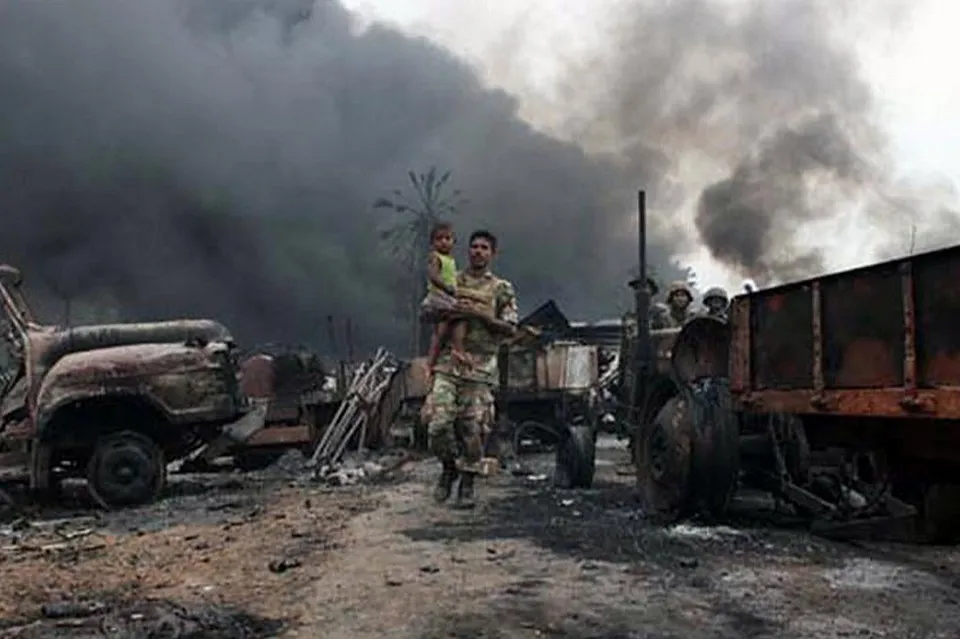
In Malawi, Chad, and South Sudan, children die slowly—of hunger, of displacement, of war that’s been normalised into background noise. At Zamzam Camp in Darfur, a child dies every two hours.
But you won’t hear that on the evening news. When a war breaks out in Europe, global media pitch tents. When it breaks out in Africa? Crickets.
The media landscape stays quiet. Because the victims aren’t deemed relatable. Their stories aren’t considered strategic. Their pain doesn’t move markets.
The result? An ecosystem that treats Black and Brown death as static noise—unfortunate, maybe, but not actionable. Not urgent.
Human Dignity Shouldn’t Be Conditional
We’re told we need a “strategic reason” to care. We say Congo matters for its cobalt. We say the Congo Basin matters for climate survival. But what if Congo mattered simply because Congolese people do?
What if that were enough?
When human dignity only registers when it serves Western interests, that’s not a failure of compassion. That’s power doing exactly what it was built to do. That’s colonial logic in real time.
The Feminist Reckoning
If your feminism only extends to women who look like you, speak like you, or live near you— It isn’t feminism. It’s selective mourning. It’s racism.
Real intersectional feminism does not flinch when the names are hard to pronounce. It does not look away when the victims are Tamil civilians in Sri Lanka or displaced girls in Sudan. It doesn’t wait for a media filter before it decides to care.
Genocide, war crimes, starvation, and displacement demand the same outrage—no matter where or to whom they happen.
You cannot claim to fight patriarchy and ignore the disappearance of thousands of Indigenous women. You cannot advocate for reproductive justice and stay silent as Black mothers die in famine zones. You cannot cry for “the girl child” and look away when Congolese schoolgirls are raped in cobalt mines powering your phone.
Your silence is not neutral. It is consent.
Urgency Is Not Enough
Justice does not live in hashtags. It lives in who we choose to see when no one’s watching. In who we keep showing up for after the cameras have packed up.
Right now:
Chad hosts over one million refugees, mostly from Sudan.
Congo—one of the world’s most resource-rich nations—has more than 6.9 million people displaced.
On U.S. Indigenous reservations, suicide rates are three times the national average.
One in three Indigenous women will experience sexual violence in her lifetime.
These are not new crises. We’ve seen this before. And the world—the same one that promised “never again”— is watching it happen again. And again. And again.
So what will make this time different? What will it take to get you to give a shit?
We Don’t Need More Flashpoint Solidarity
We need a politics of presence— One that stays when it’s no longer photogenic. That stays when the cameras leave. That stays when the stories don’t centre us.
We need a solidarity that isn’t proximity-dependent. That doesn’t require whiteness to activate compassion. That doesn’t let trending topics dictate our moral compass.
Because if we only show up when it’s viral, we are not building movements. We’re chasing moments.
What Will You Do When No One’s Clapping?
We say never again. But we mean never again unless it’s inconvenient. We say all lives matter with our mouths, but ration our outrage with precision.
The truth? Black and Brown babies are dying—unseen, uncounted, unacknowledged.
They deserve more than selective rescue. They deserve more than our guilt. They deserve our action. They deserve our rage.
And until we treat all violence like it matters—until we stop asking whether suffering is trending— we are the problem we claim to fight.